A Frozen AC Is a Summer Warning Sign
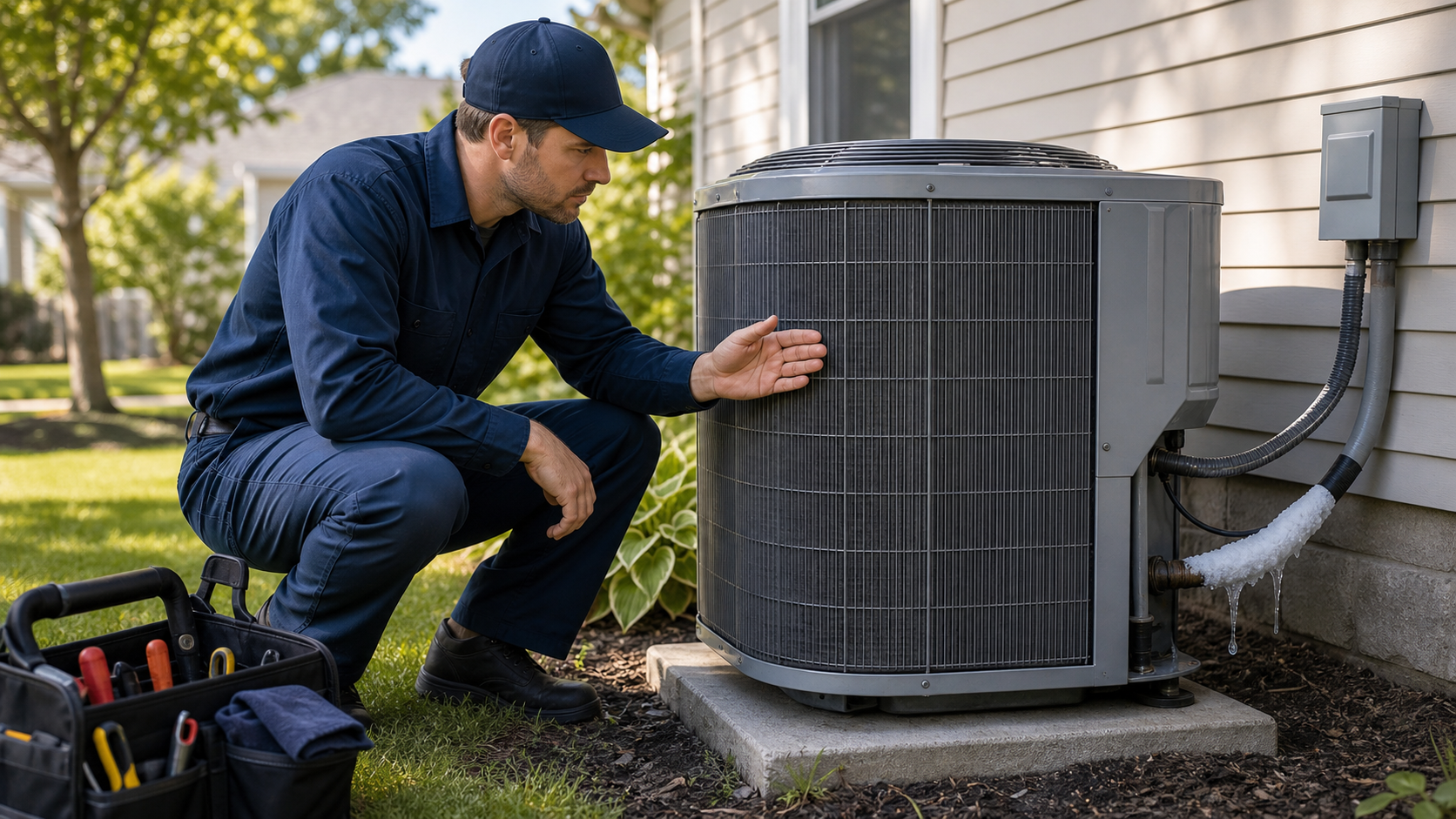
When an air conditioner freezes up in the middle of summer, it can be confusing. The outdoor temperature may be high, the thermostat may be set correctly, and the system may still be running, but the house keeps getting warmer. Then you notice ice on the refrigerant line, the indoor coil, or around part of the equipment.
A frozen air conditioner is not something to ignore. Ice usually means the system is not moving heat the way it should. If the AC keeps running while frozen, airflow can get worse, parts can stay under stress, and a small service issue can turn into a bigger repair.
For homeowners in Methuen, the Merrimack Valley, and Southern New Hampshire, this often shows up during humid summer weather when the AC is already working hard. Here are the most common reasons an air conditioner freezes up, what you can safely check, and when to call for AC service.
1. Restricted Airflow Across the Indoor Coil
Poor airflow is one of the most common reasons an AC freezes. Your air conditioner needs warm indoor air moving across the evaporator coil. If not enough air passes over that coil, the coil temperature can drop too low and moisture can freeze on it.
Airflow problems can come from:
- a clogged or overly restrictive air filter
- blocked return vents
- closed or covered supply vents
- a dirty evaporator coil
- blower motor or fan problems
- duct restrictions or poorly balanced ductwork
The U.S. Department of Energy notes that routine air conditioner maintenance includes attention to filters, coils, and fins because they affect performance. That is practical advice for homeowners: if airflow is restricted, the system cannot cool normally.
2. A Dirty Evaporator Coil
Even if the filter looks fine, dirt can still build up on the indoor coil over time. Dust, pet hair, renovation debris, and normal household buildup can reduce heat transfer. When the coil cannot absorb enough heat from the air moving across it, freezing becomes more likely.
A dirty coil can also make the AC run longer, cool unevenly, or struggle to control humidity. Cleaning an evaporator coil is usually a technician-level job because access, drainage, and nearby components must be handled carefully.
3. Low Refrigerant or a Refrigerant Leak
Low refrigerant can also cause freezing. An air conditioner is a sealed system, so refrigerant should not simply disappear. If the charge is low, there may be a leak or another issue that needs diagnosis.
Signs that may point to a refrigerant-related problem include:
- ice on the refrigerant line or coil
- weak cooling even after the filter is changed
- longer run times than usual
- hissing sounds near refrigerant lines
- repeated freezing after the system thaws
Adding refrigerant without finding the cause is not a real fix. A proper repair should identify why the system is low and whether a leak repair, component repair, or replacement discussion makes more sense.
4. Blower Fan or Motor Problems
The indoor blower moves air through the system and across the coil. If the blower is not running correctly, the coil may get too cold even though the outdoor unit is operating.
Blower issues can show up as weak airflow from vents, unusual indoor unit noises, or a system that runs but barely moves air. Sometimes the problem is electrical. Other times it may be a motor, wheel, belt, capacitor, control, or buildup issue depending on the equipment.
Because blower problems affect the whole system, they should be checked quickly. Waiting can make comfort worse and put additional stress on the AC.
5. Thermostat or Control Problems
A thermostat that is not reading properly, is placed in a bad location, or is set in a way that causes the system to run too long can contribute to freezing. Controls can also fail or send the wrong signal to equipment.
This is not always obvious from the thermostat screen. If the AC runs constantly, short cycles, or behaves differently than the setting suggests, a technician can check the thermostat, control wiring, and system operation together.
6. Running the AC When Outdoor Conditions Are Not Right
Most residential air conditioners are designed for warm-weather cooling. Running the AC during cooler outdoor temperatures can sometimes contribute to coil freezing, especially if airflow or maintenance issues are already present.
This is less common during a hot Merrimack Valley summer, but it can happen during shoulder-season use, cool nights, or in homes where the AC is run aggressively for humidity control. If freezing happens repeatedly, the system should be checked rather than treated as a one-time odd event.
What to Do If Your AC Is Frozen
If you see ice on your air conditioner, do not chip it off with tools. That can damage refrigerant lines or coils. Instead, take these safer first steps:
- Turn cooling off at the thermostat.
- Set the fan to on if your system allows it, which can help move air while the ice melts.
- Check and replace a dirty air filter.
- Make sure return and supply vents are open and not blocked.
- Watch for water as the ice melts and protect nearby areas if needed.
- Call for service if the system freezes again, cooling remains weak, or you see heavy ice.
Do not restart the system over and over if it keeps freezing. Repeated operation while frozen can make the problem worse.
When to Call for AC Repair
You should schedule AC service if the system freezes more than once, airflow stays weak, the home will not cool, or you suspect a refrigerant or blower issue. You should also call sooner if the system is making unusual noises, tripping breakers, or leaking water around the indoor equipment.
A good AC inspection should look at the full system: filter, airflow, coil condition, blower operation, refrigerant performance, thermostat behavior, drainage, and the outdoor unit. Guessing at one part can miss the real cause.
How Maintenance Helps Prevent Freeze-Ups
Seasonal maintenance cannot prevent every breakdown, but it can catch many of the conditions that lead to frozen coils. A tune-up can help identify dirty coils, clogged filters, weak airflow, drain issues, electrical concerns, and performance changes before peak summer heat.
For homeowners who want a recurring maintenance option, NewGen HVAC offers a Comfort Plan with annual or monthly membership options, priority scheduling, member pricing on repairs, and tune-up choices. You can learn more at /comfort-plan/.
Local AC Service in Methuen, Merrimack Valley, and Southern NH
NewGen HVAC is a family-run, bilingual HVAC company based in Methuen, MA, serving homeowners across the Merrimack Valley and Southern New Hampshire. Since 2014, we have helped local homes and businesses with practical HVAC service, AC repair, heat pumps, mini-splits, commercial HVAC, commercial refrigeration, and kitchen equipment service.
If your air conditioner is freezing up, running constantly, or not keeping your home comfortable, contact NewGen HVAC for a straightforward diagnosis. Call (978) 876-8558, email jc@newgenhvac.com, or visit /contact/ to request a free estimate or book service. For urgent equipment issues that cannot wait, ask about 24/7 emergency help.
FAQ
Can a dirty filter really make an AC freeze?
Yes. A clogged filter can reduce airflow across the indoor coil. When airflow drops too much, the coil can get cold enough for moisture to freeze.
Should I turn off my AC if it is frozen?
Yes. Turn cooling off and allow the system to thaw. If your thermostat has a fan-only setting, running the fan may help melt the ice. Call for service if it freezes again or cooling stays weak.
Is a frozen AC always low on refrigerant?
No. Low refrigerant is one possible cause, but airflow restrictions, dirty coils, blower problems, and control issues can also cause freezing. A technician should diagnose the system before any repair is recommended.
Does NewGen HVAC service frozen AC units near Methuen?
Yes. NewGen HVAC provides AC repair and HVAC service in Methuen, the Merrimack Valley, and Southern New Hampshire, including nearby communities such as Lawrence, Haverhill, Andover, Lowell, Salem NH, and Pelham NH.