Replacing an air conditioner is a good time to compare options
If your older air conditioner is struggling through another New England summer, replacement may be on your mind. For many homeowners, the first question is simple: should you install another central AC unit, or should you consider a heat pump?
That question is showing up more often in Methuen, the Merrimack Valley, and Southern New Hampshire because heat pumps can provide both cooling and heating. But that does not mean every home needs the same answer. The right choice depends on your existing ductwork, comfort goals, heating setup, budget, electrical capacity, insulation, and how you use the home.
NewGen HVAC helps homeowners compare practical options without hype. Here is what to consider before replacing your air conditioner.
What a central AC system does well
A central air conditioner is designed for cooling. It uses an outdoor condenser, an indoor coil, ductwork, and a blower to move cool air through the home. If your house already has ductwork in good condition and you are happy with your heating system, replacing the AC with another central air conditioner may be the most straightforward path.
Central AC can be a strong fit when:
- the existing ductwork is properly sized and in good condition
- the home already has a reliable furnace or boiler for heating
- you want a simpler like-for-like cooling replacement
- the current system layout cools the home evenly
- the main issue is age, efficiency, or repair cost rather than comfort design
A new air conditioner can improve comfort and reliability when the old unit is oversized, undersized, worn out, or repeatedly breaking down. The key is making sure the replacement is selected for the actual home, not just matched blindly to the old equipment label.
What a heat pump adds
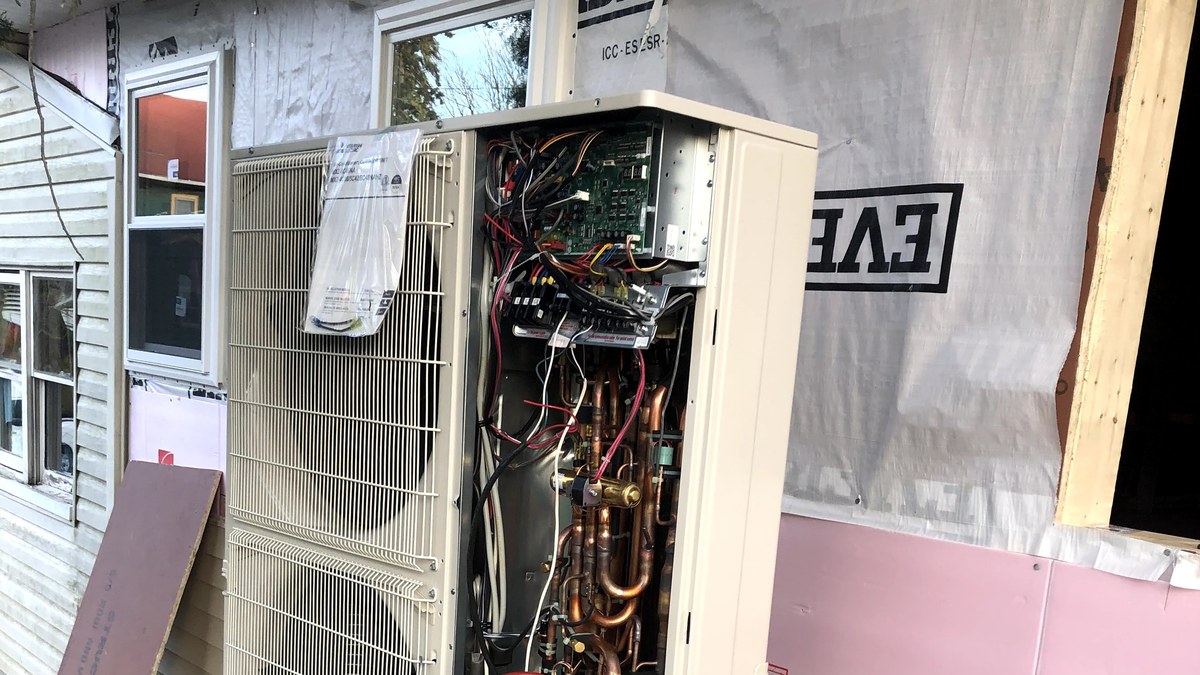
A heat pump looks similar to a central AC unit outside, but it can move heat in both directions. In summer, it cools the home like an air conditioner. In cooler months, it can provide heating by moving heat into the house.
According to the U.S. Department of Energy, heat pumps can be an efficient heating and cooling option because they transfer heat rather than creating heat directly. For many homes, that can make them worth considering when an older AC unit is already due for replacement.
A heat pump may be a good fit when:
- you want one system that can help with both cooling and heating
- your existing heating system is aging or expensive to run
- you want more efficient shoulder-season heating
- you are planning other comfort upgrades, such as insulation or duct improvements
- your home layout can support the system properly
Heat pumps are not only for new construction. They can work well in many older homes, but the design matters. Equipment sizing, duct condition, electrical requirements, thermostat setup, and backup heat strategy should all be reviewed before installation.
The ductwork question matters
Before choosing central AC or a ducted heat pump, your ductwork deserves attention. Many comfort complaints come from airflow problems, not just the outdoor unit. Leaky ducts, poor returns, undersized runs, restricted filters, or poorly balanced rooms can make a new system feel disappointing if they are ignored.
Ask these questions before replacing equipment:
- Do some rooms stay warmer than others?
- Is airflow weak at certain vents?
- Are there additions, finished attics, or renovated spaces that the old system never handled well?
- Does the system run for a long time without reaching the thermostat setting?
- Are filters getting dirty quickly or restricting airflow?
If ductwork is the problem, replacing the condenser alone may not solve the comfort issue. A good HVAC inspection should look at the whole system.
Mini-splits can be part of the conversation too
Not every home needs a fully ducted solution. Ductless mini-splits can be a practical option for finished basements, additions, sunrooms, garages, home offices, older homes without ducts, or rooms that never stay comfortable.
In some homes, a homeowner may keep central AC for the main living area and add a mini-split where the ductwork does not reach well. In other homes, ductless heat pumps may be the better replacement path.
The best option depends on the layout and comfort problem you are trying to solve.
Repair or replace: when replacement starts to make sense
A repair may still be reasonable if your air conditioner is in good condition and the issue is isolated. But replacement becomes more practical when problems start repeating or the system can no longer keep up.
Consider replacement if you notice:
- frequent service calls during cooling season
- weak cooling even after basic maintenance
- long run times with poor comfort
- rising electric bills without a clear change in usage
- major compressor or refrigerant-related problems
- parts that are hard to source
- a system that is no longer sized well for the home
The goal is not to replace equipment early. The goal is to avoid putting money into a system that is becoming unreliable and still may not deliver the comfort you need.
Do not skip maintenance before making the decision
Sometimes an air conditioner seems ready for replacement when it is actually overdue for maintenance or a targeted repair. Dirty coils, clogged filters, weak capacitors, drain issues, thermostat problems, and airflow restrictions can all reduce performance.
The Department of Energy recommends routine air conditioner maintenance because dirty filters, coils, and fins can reduce system performance over time. For homeowners, that means a proper inspection can help separate a maintenance issue from a true replacement decision.
If you want a recurring maintenance option, NewGen HVAC offers a Comfort Plan with annual or monthly membership options, priority scheduling, member pricing on repairs, and seasonal tune-up choices. You can learn more at /comfort-plan/.
Local factors in Methuen, Merrimack Valley, and Southern NH
Homes in this area vary a lot. Some have older ductwork, finished third floors, additions, converted porches, basements, or mixed heating systems. Summer humidity matters, but winter performance matters too if you are considering a heat pump.
That is why a local inspection is important. A replacement recommendation for a newer home in Salem, NH may be different from one for an older home in Lawrence, Methuen, Haverhill, or Lowell. The equipment should match the home, not just the season.
Questions to ask before you choose
Before approving an air conditioner replacement, ask your HVAC contractor:
- Is central AC, a heat pump, or a mini-split the best fit for this home?
- Does the ductwork need repair, sealing, balancing, or redesign?
- What size equipment does the home actually need?
- How will humidity control be handled?
- If choosing a heat pump, what is the backup heat plan?
- Are electrical or thermostat upgrades needed?
- What maintenance should be scheduled after installation?
Clear answers up front can prevent comfort problems later.
Get a practical AC replacement recommendation
If your AC unit is nearing the end, NewGen HVAC can inspect your system and explain whether central AC, a heat pump, or a ductless option makes the most sense for your home. We are a family-run, bilingual HVAC company based in Methuen, serving homeowners across the Merrimack Valley and Southern New Hampshire.
To request a free estimate, call (978) 876-8558 or visit /contact/. You can also review NewGen HVAC services at /services/ and service areas at /service-areas/.
FAQ
Is a heat pump the same as an air conditioner?
A heat pump can cool like an air conditioner, but it can also provide heating by moving heat into the home. That added heating function is the main difference.
Should I replace my AC with a heat pump?
It depends on your home, ductwork, electrical setup, heating system, and comfort goals. A heat pump can be a strong option, but it should be evaluated against your actual house and existing equipment.
Can I keep my furnace and add a heat pump?
In some homes, yes. A heat pump can sometimes be paired with another heating system. The right setup depends on the equipment, controls, fuel source, and how the home is designed.
Does NewGen HVAC install mini-splits too?
Yes. NewGen HVAC services and installs mini-splits, heat pumps, central AC systems, furnaces, commercial HVAC, commercial refrigeration, and commercial kitchen equipment.