7 Signs Your AC Compressor May Be Failing
When an air conditioner stops cooling the way it should, many homeowners assume the problem has to be low refrigerant or a dirty filter. Sometimes that is true. But in other cases, the issue is tied to one of the most important parts of the system: the compressor.
The compressor is what helps move refrigerant through the cooling cycle. When it starts failing, your AC may still run for a while, but performance usually gets worse before a full breakdown happens.
For homeowners in Methuen, the Merrimack Valley, and Southern New Hampshire, catching those warning signs early can make the difference between a manageable repair and a much more expensive problem during the hottest part of the season.
At NewGen HVAC, we help homeowners with AC repair, inspections, maintenance, and system replacement recommendations when needed. Here are seven signs your AC compressor may be failing.
1. The AC is running, but cooling is weak
One of the first signs of compressor trouble is an air conditioner that still turns on but does not cool the house the way it used to. The system may run for long stretches, yet the indoor temperature drops very slowly or never quite reaches the thermostat setting.
Weak cooling can also have other causes, so this sign alone does not confirm compressor failure. Still, when performance drops noticeably and other symptoms start showing up too, the compressor becomes a serious part of the diagnosis.
What to watch for
- supply air feels less cold than usual
- the home takes much longer to cool
- certain rooms stay warmer than before
- the thermostat is set correctly but comfort keeps slipping
2. The outdoor unit is making unusual noises
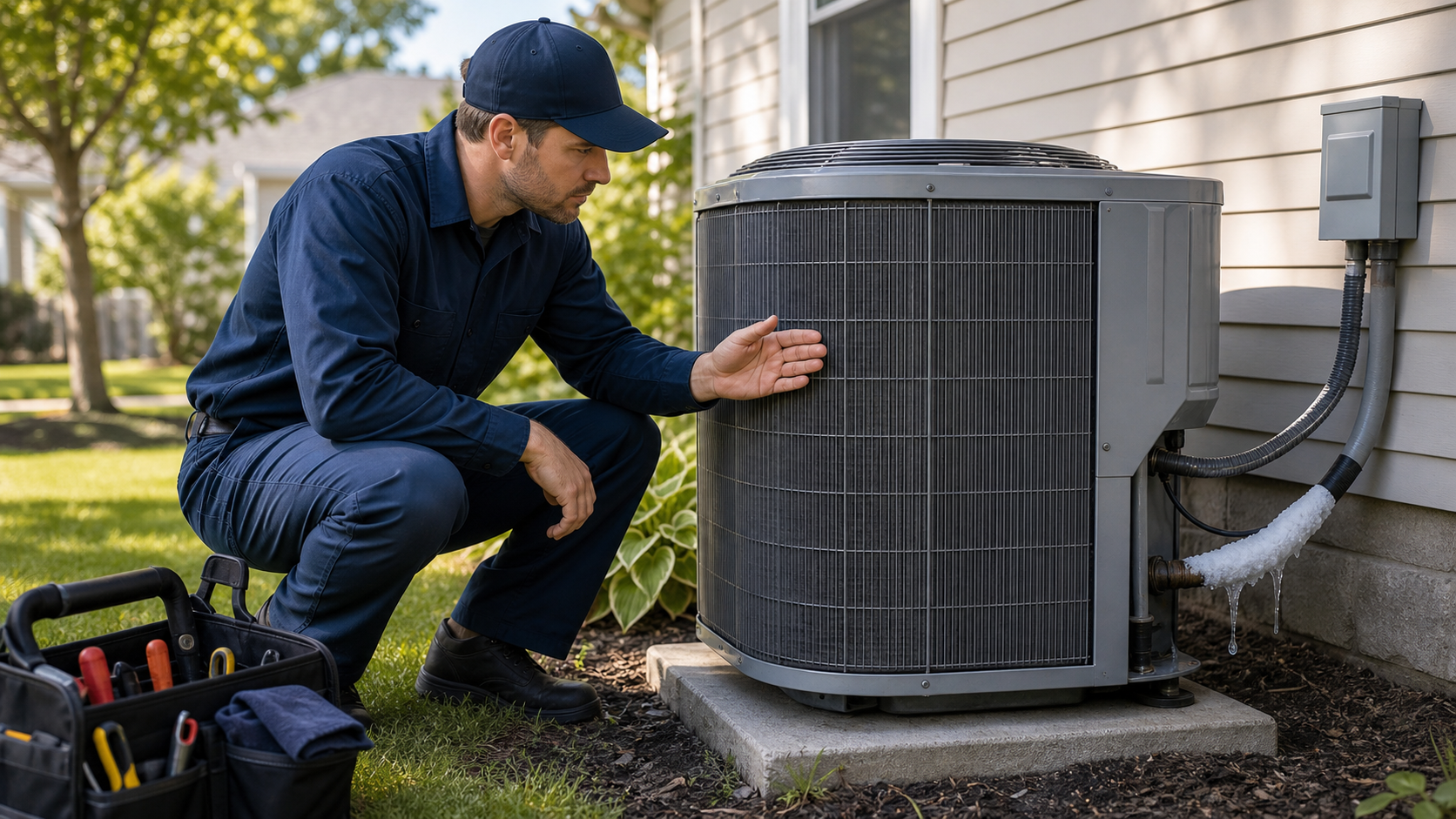
Air conditioners are not silent, but loud or unusual sounds from the outdoor unit are worth paying attention to. A failing compressor can sometimes cause rattling, grinding, hard-start noises, or a loud buzzing sound when the system is trying to turn on.
Some sounds may come from other components, but noisy startup or harsh operational sounds are never something homeowners should ignore.
Common sound changes
- louder-than-normal startup
- buzzing that continues while the system runs
- clicking followed by failed starts
- mechanical sounds that were not there before
3. The system is short cycling
Short cycling means the AC turns on and off too frequently instead of completing normal cooling cycles. This puts extra wear on the system and can be especially hard on major electrical and mechanical components.
A struggling compressor may overheat, trip safety controls, or fail to keep the system running consistently. If your AC starts and stops repeatedly on mild or hot days, it should be checked soon.
4. Your energy bills suddenly rise
When a compressor is losing efficiency, the system often has to work harder and run longer to do the same job. That can show up as a noticeable increase in your electric bill, especially if your usage habits have not changed much.
Homeowners sometimes notice this before they realize how much cooling performance has dropped. A rising bill by itself does not prove compressor failure, but it is an important clue when combined with weak cooling or longer run times.
5. The outdoor unit struggles to start
If the outdoor unit hesitates, hums, or seems like it is trying to start without fully kicking on, the compressor or related electrical components may be under stress. In some cases, the system eventually starts. In other cases, it trips protection or shuts down.
This is one of those issues that often gets worse instead of better. What starts as an occasional hard start can turn into a complete no-cool call during peak summer weather.
6. Warm air is coming from the vents
If the thermostat is set to cooling and the system is running but the vents are pushing out lukewarm or warm air, the refrigeration cycle may not be working correctly. A failing compressor can be one reason the system is no longer removing heat the way it should.
Because several AC problems can cause warm airflow, this symptom should be diagnosed properly instead of guessed at. The goal is to find out whether the problem is a control issue, airflow issue, refrigerant-related issue, or compressor-related issue.
7. The circuit breaker trips repeatedly
A compressor that is overheating or drawing too much power can sometimes cause the breaker to trip. If you reset it and the problem comes back, that is not a normal nuisance issue. Repeated breaker trips are a sign the system needs professional attention.
Homeowners should not keep resetting the breaker over and over. That can hide a serious electrical or mechanical problem and increase the risk of further damage.
What homeowners should do next
If you notice one or more of these signs, the best next step is to schedule an inspection instead of waiting for a full no-cool breakdown. Compressor problems are not always the result of one isolated failure. Sometimes the bigger question is why the compressor is under stress in the first place.
An inspection may uncover issues such as airflow restrictions, dirty coils, electrical problems, age-related wear, or other conditions affecting the whole system. The earlier that happens, the more options you usually have.
Repair or replace?
In some cases, compressor-related problems can be addressed with repair. In others, replacement may make more sense depending on the age of the AC, overall condition of the equipment, warranty status, and repair cost compared with the value of the system.
That is why a practical diagnosis matters. At NewGen HVAC, we take a straightforward approach. If a repair makes sense, we will say so. If replacement is the better long-term option, we will explain why clearly so you can make an informed decision.
CTA
If your air conditioner is showing signs of compressor trouble, contact NewGen HVAC to book an AC inspection in Methuen, the Merrimack Valley, or Southern New Hampshire. We provide practical recommendations, honest diagnosis, and reliable HVAC service for local homeowners.
Suggested internal links:
- Learn more about residential HVAC services: /services/
- Ask about maintenance that helps catch issues early: /comfort-plan/
- Request service or an estimate: /contact/
FAQ
Can an AC compressor be repaired?
Sometimes yes, depending on the exact issue. In other cases, the problem may point to a compressor that is no longer worth repairing.
Should I keep running my AC if the compressor is failing?
If the system is making unusual noises, tripping breakers, or struggling to start, it is better to have it inspected soon instead of forcing it to keep running.
How do I know if it is worth replacing the compressor?
That usually depends on the age of the system, the total repair cost, and whether the rest of the equipment is still in good shape.