Commercial HVAC Roof Curbs and Ductwork: What Business Owners Should Know
Commercial HVAC equipment is often out of sight, especially when it sits on a flat roof above a restaurant, retail space, office, or small commercial building. But the parts that connect that rooftop equipment to the building matter just as much as the unit itself. Roof curbs, duct openings, sheet-metal transitions, insulation, sealing, and service access all affect comfort, reliability, and the risk of building problems later.
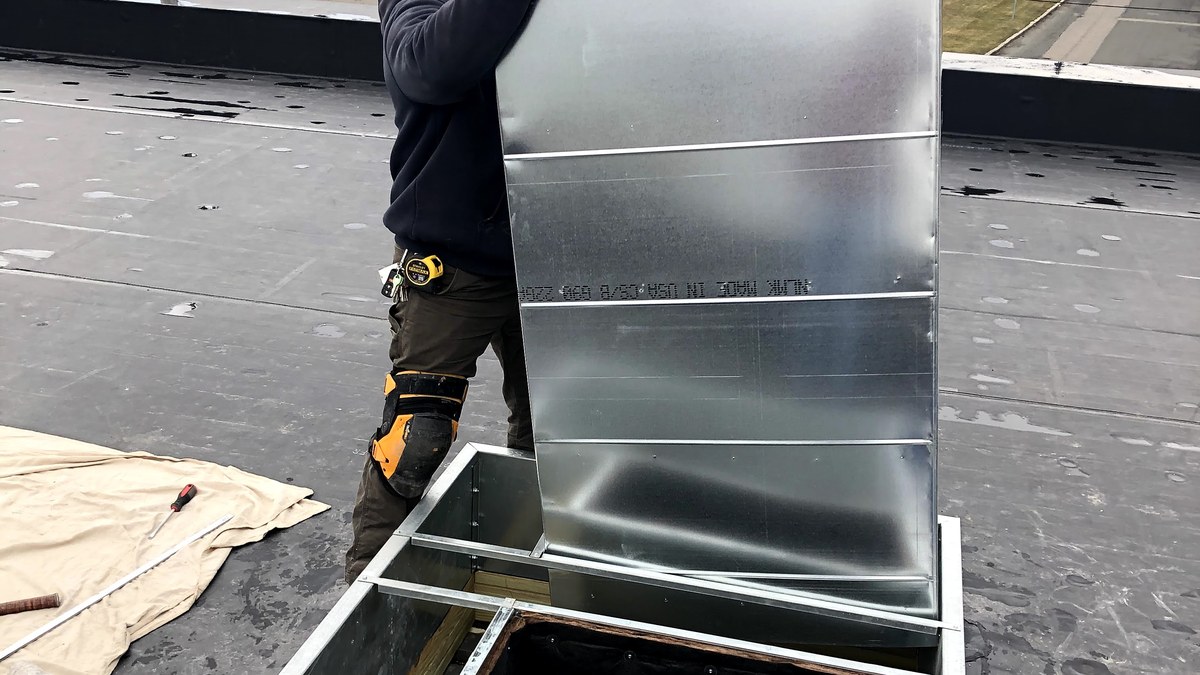
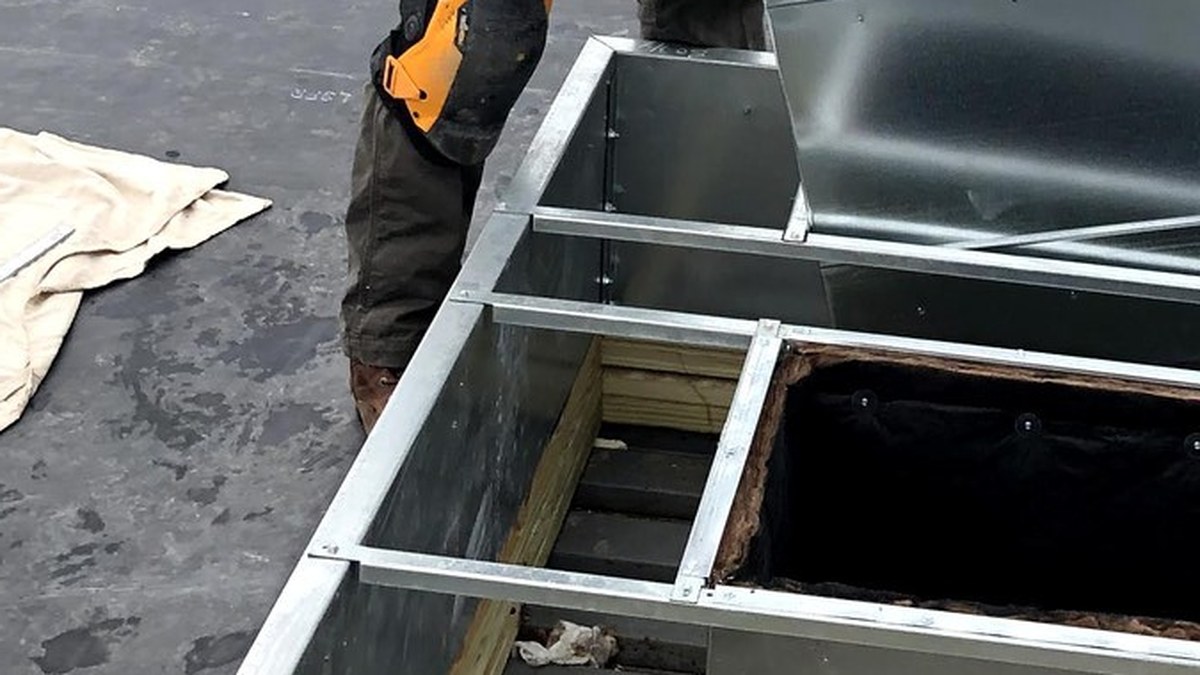
The work photo used for this post shows rooftop commercial HVAC ductwork and a roof curb opening during installation work. It is a practical reminder that commercial HVAC is not only about choosing a unit. The way the system is connected to the roof and building can influence airflow, water protection, maintenance access, and long-term performance.
For businesses in Methuen, the Merrimack Valley, and Southern New Hampshire, here is what owners and property managers should understand before approving commercial rooftop HVAC work.
What Is a Commercial HVAC Roof Curb?
A roof curb is the raised support or framed opening that allows rooftop HVAC equipment, ductwork, or ventilation components to connect through the roof. It helps create a stable, weather-resistant transition between the roof surface and the mechanical system above it.
In simple terms, the curb is part structure, part connection point, and part weather barrier. It may support equipment weight, help align supply and return air openings, provide space for insulation, and give installers a way to seal the roof penetration properly.
When roof curbs are planned and installed correctly, they help reduce common problems such as air leakage, water intrusion, vibration, and difficult service access. When they are rushed or mismatched to the system, small issues can become expensive building headaches.
Why Ductwork Connections Matter
Commercial HVAC ductwork carries conditioned air from the equipment to the spaces people actually use. If the duct transition at the roof is poorly sized, loosely connected, or not sealed well, the system may lose airflow before that air ever reaches the occupied space.
That can show up as:
- Rooms that are hard to heat or cool
- Uneven temperatures from one area to another
- Longer equipment run times
- Higher utility usage
- More noise or vibration
- Complaints from employees, tenants, or customers
A rooftop system may be new, but if the duct connection is wrong, the building may still feel uncomfortable. This is why a practical commercial HVAC contractor looks at the full path: equipment, curb, ductwork, insulation, controls, and the actual business use inside the space.
Weatherproofing Is Not Optional
Any roof penetration deserves careful attention. New England buildings deal with rain, snow, freeze-thaw cycles, wind, and summer humidity. A roof curb or duct opening that is not properly flashed, sealed, and coordinated with the roofing system can become a leak point.
Business owners may first notice ceiling stains, musty odors, damaged insulation, or water near interior ductwork. Sometimes the HVAC system gets blamed for the problem when the real issue is the roof connection around the mechanical opening.
Good commercial HVAC work should respect the roof. That means checking curb condition, looking at flashing and sealant, avoiding shortcuts around penetrations, and coordinating with roofing professionals when the roof itself needs repair.
Service Access Saves Time Later
The best time to think about service access is before the work is finished. Technicians need safe, practical access to inspect belts, filters, drains, electrical components, controls, dampers, and duct transitions. If equipment or ductwork is boxed in too tightly, every future maintenance visit becomes harder.
Service access matters because commercial HVAC downtime affects operations. A restaurant dining room that is too hot, a retail store with uncomfortable customers, or an office with poor airflow can turn into lost productivity and lost revenue. Clear access helps technicians diagnose issues faster and perform preventative maintenance more efficiently.
Signs a Rooftop HVAC Connection May Need Attention
You do not need to climb on the roof to know something may be wrong. Business owners and managers should pay attention to indoor symptoms and call a qualified technician when they notice patterns such as:
- Water stains around ceiling tiles or duct openings
- Airflow that feels weak even when the unit is running
- Hot or cold spots in specific parts of the building
- Rattling, banging, or vibration near rooftop equipment
- Odors that seem to come from ductwork
- Frequent service calls without a clear fix
- Higher energy bills without a change in business use
These signs do not prove the roof curb or duct transition is the cause, but they are worth investigating. A proper diagnosis should look at both the rooftop equipment and the building-side connections.
Why Preventative Maintenance Helps
Commercial HVAC maintenance is not just filter replacement. For rooftop systems, maintenance should also include a basic visual review of equipment condition, drainage, panels, curb area, obvious air leakage, and anything that could affect safe operation or future service.
Small issues are easier to address before they lead to water damage, equipment strain, or emergency downtime. Preventative maintenance is especially important for restaurants, shops, offices, and mixed-use buildings that rely on steady comfort during business hours.
Local Commercial HVAC Help in Methuen and Southern NH
NewGen HVAC / New Generation HVAC LLC is a family-run HVAC and refrigeration company based in Methuen, MA. Since 2014, we have helped local homeowners and businesses across the Merrimack Valley and Southern New Hampshire with practical HVAC service, commercial HVAC work, commercial refrigeration, and commercial kitchen equipment support.
If your business has rooftop HVAC equipment, ductwork concerns, airflow problems, or recurring comfort complaints, we can inspect the system and explain what is happening in plain language. We focus on honest diagnosis, fair recommendations, and work that makes sense for the building.
Schedule Commercial HVAC Service
Need help with commercial HVAC in Methuen, Lawrence, Haverhill, Andover, Salem NH, or nearby areas? Contact NewGen HVAC for a free estimate or service visit. Call (978) 876-8558, email jc@newgenhvac.com, or visit https://www.newgenhvac.com/contact/. For equipment problems that cannot wait, ask about 24/7 emergency service.