Outdoor Heat Pump Unit Installation: Clearance, Placement, and Service Access Matter
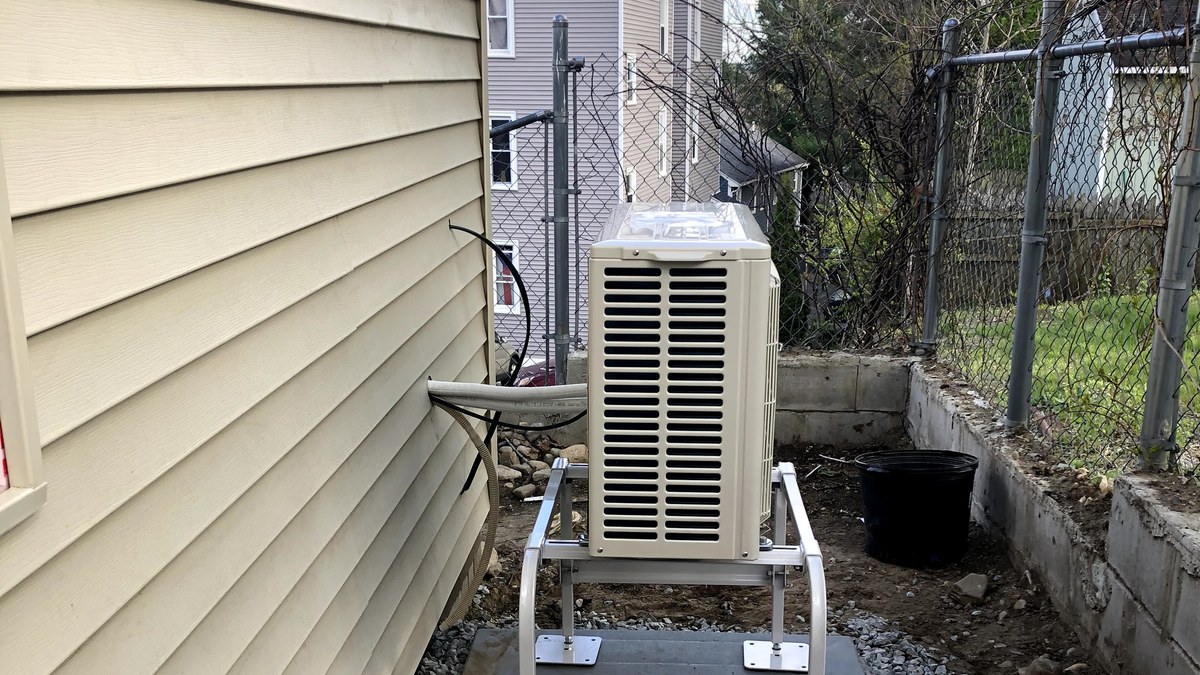
The photo for this post shows an outdoor HVAC condenser or heat pump unit installed beside a home. It is a good reminder that performance is not only about the brand or size of the equipment. Where the outdoor unit sits, how much open space it has, how it drains, and whether a technician can reach it all affect how well the system works over time.
For homeowners in Methuen, the Merrimack Valley, and Southern New Hampshire, outdoor heat pump and AC units have to deal with summer heat, spring pollen, leaves, rain, snow, ice, and freeze-thaw cycles. A clean installation gives the unit a better chance to move air properly, shed water, stay serviceable, and last longer.
NewGen HVAC / New Generation HVAC LLC is a family-run HVAC company based in Methuen, MA. Since 2014, we have helped local homeowners and businesses with heating, cooling, mini-splits, heat pumps, AC repair, commercial HVAC, refrigeration, and kitchen equipment service. Here is what homeowners should know before installing or replacing an outdoor unit.
Why outdoor unit placement matters
An outdoor heat pump or AC condenser needs to breathe. The unit pulls outdoor air through the coil and rejects or absorbs heat depending on the season and system type. If airflow is blocked by a wall, fence, shrub, storage bin, snow pile, or debris, the equipment can run longer and work harder than it should.
Poor placement can lead to symptoms like:
- weaker cooling or heating during extreme weather
- longer run times
- higher energy use
- nuisance shutdowns or error codes
- louder operation from restricted airflow
- more dirt, leaves, or debris collecting on the coil
- harder maintenance and repair access
The exact clearance requirements depend on the manufacturer and model, so the installation manual always matters. The practical point is simple: an outdoor unit should not be squeezed into a spot where it cannot move air or be serviced safely.
Service access is not optional
Homeowners often focus on hiding the equipment, especially when the unit sits near a walkway, patio, or side yard. That is understandable, but the unit still needs access for maintenance and repair. A technician may need room to remove panels, check electrical components, clean the coil, inspect refrigerant lines, test operation, or replace parts.
If a unit is too close to a wall, fence, deck, or landscaping, a normal service visit can take longer and become more frustrating. In some cases, poor access can delay diagnosis or make a repair more expensive than it needed to be.
When planning an outdoor heat pump installation, leave room not only for the equipment itself but also for future service. A system should be installed for the next 10 to 15 years of ownership, not just for how it looks on day one.
Keep the unit level and supported
A stable base matters. Outdoor units are commonly installed on a pad, stand, wall bracket, or other approved support. The goal is to keep the unit level, secure, and protected from direct contact with soil or standing water.
A poor base can create problems over time. If the unit settles, tilts, or vibrates excessively, it can put stress on refrigerant lines, electrical connections, cabinet panels, and internal components. In New England, ground movement from freeze-thaw cycles can make this worse if the base was not prepared correctly.
For many homes, a raised stand or properly prepared pad can help with drainage, snow exposure, and service access. The right setup depends on the property, equipment type, and manufacturer requirements.
Drainage and snow exposure matter in New England
Outdoor equipment needs to handle water. During AC operation, rain and normal weather exposure are expected. During heat pump heating operation, the outdoor unit may go through defrost cycles and shed water around the base. That water needs somewhere to go.
If the unit sits in a low spot, water can collect around the base. In winter, that water can freeze and create ice around the unit. Snow can also block airflow if the unit is too low, too close to a drift-prone area, or not maintained after storms.
Homeowners should keep the area around the unit clear and avoid piling snow against it. If you notice repeated ice buildup, unusual noise, or heating performance problems during winter, schedule service instead of trying to force the system to keep running.
Watch the refrigerant lines and electrical routing
The lines and wiring connected to the outdoor unit are just as important as the box itself. Refrigerant lines should be routed, supported, insulated, and protected in a way that fits the equipment and the home. Electrical disconnects and wiring should be installed safely and accessibly.
From the homeowner side, the important thing is to avoid damaging these connections. Do not lean tools, bikes, trash barrels, or landscaping equipment against the unit. Be careful when trimming weeds or using a string trimmer near the refrigerant lines, drain lines, or low-voltage wiring. Small damage outside can turn into a larger comfort problem later.
If insulation is missing, lines look damaged, the unit has shifted, or wiring appears loose, call a qualified HVAC technician.
Landscaping can help or hurt
Landscaping around an outdoor HVAC unit should be planned carefully. Shrubs, fences, or screens can improve appearance, but they should not block airflow or service access. Plants also grow over time, so a clearance that looks fine in April may be too tight by August.
A good rule for homeowners is to keep the unit visible and easy to reach. Trim back vegetation, remove leaves, keep mulch from piling against the base, and avoid enclosing the unit tightly on multiple sides. If you want to hide the unit, ask your HVAC contractor what spacing is safe for the specific equipment.
Signs the outdoor unit needs attention
Even a well-installed outdoor unit needs maintenance. Call for service if you notice:
- the unit is running but the home is not cooling or heating well
- ice forming on the outdoor unit or refrigerant lines
- loud buzzing, grinding, rattling, or fan noise
- the unit repeatedly starts and stops
- the breaker trips or the disconnect looks damaged
- the unit has shifted, settled, or is no longer level
- heavy dirt, leaves, cottonwood, or grass clippings on the coil
- refrigerant line insulation is missing or damaged
Do not remove panels, bypass controls, or wash the unit aggressively with high pressure. A basic visual check is fine, but electrical and refrigerant problems should be handled by a trained HVAC professional.
Maintenance helps protect the installation
Good installation sets the system up for success, but maintenance keeps it that way. Seasonal HVAC maintenance can help catch dirty coils, weak capacitors, loose connections, drainage concerns, refrigerant issues, and airflow problems before they become bigger failures.
For homeowners, NewGen HVAC also offers a Comfort Plan with annual or monthly membership options, priority scheduling, member pricing on repairs, and tune-up options that help catch small issues early. If your home has more than one system, additional systems can be added.
A maintenance visit is also a good time to ask whether the outdoor unit still has enough clearance, whether landscaping is becoming a problem, and whether the base or stand is holding up well.
Repair, replace, or improve the setup?
If an outdoor unit is in a bad location, replacement is not always the first answer. Sometimes the practical fix is trimming vegetation, improving drainage, cleaning the coil, correcting a support issue, or adjusting the area around the equipment. Other times, an older system with poor performance, repeated repairs, or a badly compromised installation may be a better candidate for replacement.
The right decision depends on the age of the system, repair history, efficiency, comfort complaints, installation condition, and how well the equipment fits the home. NewGen HVAC focuses on honest diagnosis and practical options, whether the answer is maintenance, repair, or a new heat pump or AC installation.
Local heat pump and AC installation help
NewGen HVAC serves homeowners in Methuen, Lawrence, Haverhill, Andover, North Andover, Lowell, Tewksbury, Salem NH, Pelham, Derry, and nearby Merrimack Valley and Southern New Hampshire communities. We work on residential HVAC systems, mini-splits, heat pumps, AC repair and installation, furnace service, and seasonal maintenance.
If you are planning an outdoor heat pump installation, replacing an AC unit, or wondering whether your current outdoor unit has enough clearance, call NewGen HVAC at (978) 876-8558, email jc@newgenhvac.com, or request service through our contact page. You can also review our services or ask about the Comfort Plan for ongoing maintenance.
FAQ
How much clearance does an outdoor heat pump unit need?
Clearance depends on the equipment manufacturer and model, so the installation manual should be followed. In general, the unit needs open space for airflow and enough room for safe service access. Avoid enclosing it tightly with walls, fences, shrubs, or storage items.
Can plants or a fence be near an outdoor AC unit?
Yes, but they should not block airflow or prevent a technician from reaching the unit. Plants grow and fences can trap heat, so spacing matters. If you are unsure, ask an HVAC contractor before building a screen or planting around the equipment.
Should an outdoor heat pump be raised off the ground?
In many New England installations, raising the unit on an approved stand or properly prepared pad can help with drainage, snow exposure, and stability. The best setup depends on the property and the equipment requirements.
When should I call NewGen HVAC about my outdoor unit?
Call if the system is not heating or cooling well, the outdoor unit is noisy, iced over, tilted, blocked by debris, or difficult to access. NewGen HVAC can inspect the system and explain practical repair, maintenance, or replacement options.