Rooftop exhaust fans do more than move air
For many commercial buildings, the rooftop exhaust fan is one of those pieces of equipment nobody thinks about until something feels wrong inside. It may not be as visible as a rooftop HVAC unit or as urgent as a walk-in cooler, but it still affects comfort, air quality, moisture control, and day-to-day operations.
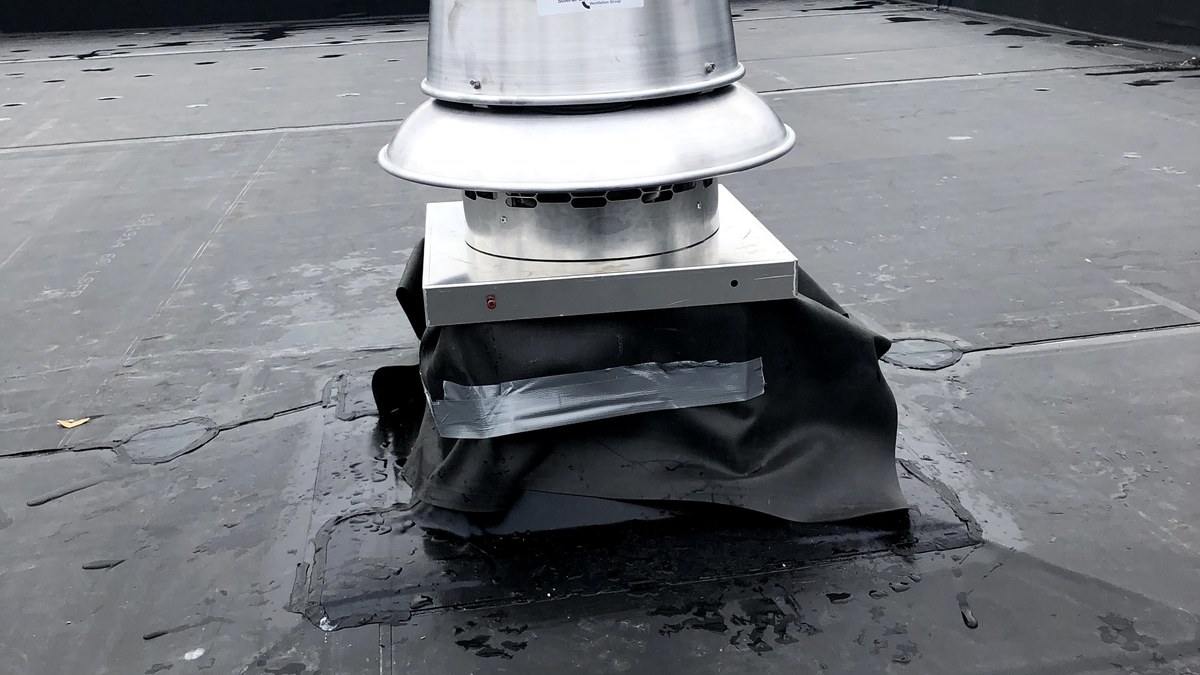
The photo for this post shows a commercial rooftop exhaust fan mounted on a flat roof. That type of equipment is common on restaurants, retail spaces, office buildings, light commercial properties, and other businesses across Methuen, the Merrimack Valley, and Southern New Hampshire. The exact setup can vary from building to building, so the goal here is not to describe one specific project. Instead, it is to explain what business owners and facility managers should watch for with this type of system.
NewGen HVAC works with residential and commercial HVAC systems, commercial refrigeration, and commercial kitchen equipment. For businesses, that means we look at comfort, airflow, uptime, and practical repair decisions together rather than treating each piece of equipment like it exists by itself.
Why commercial exhaust fans matter
A rooftop exhaust fan helps pull air out of a building. Depending on the space, that air may include heat, humidity, stale air, odors, or general process-related exhaust. When the fan is working correctly, it supports better air movement and helps other HVAC equipment do its job.
When it is not working correctly, the symptoms may show up inside before anyone notices the fan on the roof. Staff may complain that the space feels stuffy. A back room may hold heat longer than usual. Doors may become harder to open or close because the building pressure is off. Odors may linger. In some cases, the heating or cooling system has to work harder because air is not moving the way the building was designed to move it.
That is why rooftop exhaust fan maintenance is not just a roof issue. It is part of commercial HVAC maintenance and building operations.
Warning signs your rooftop exhaust fan needs service
Most exhaust fan problems start small. Catching them early can help avoid nuisance shutdowns, comfort complaints, and roof-access emergency calls. Common warning signs include:
- New rattling, grinding, squealing, or vibration from the fan
- Weak airflow at grilles or exhaust points inside the building
- Odors, humidity, or heat lingering longer than normal
- A fan that starts and stops unexpectedly
- Breakers tripping or controls not responding correctly
- Visible damage, loose panels, or worn roof flashing around the curb
- Water marks near the roof penetration after rain or snow melt
Not every symptom means the fan itself has failed. The issue may be a belt, motor, bearings, wiring, controls, a blocked intake path, or a roof curb/flashing concern. A good service visit starts with diagnosis before recommending parts.
What technicians typically inspect
A proper commercial rooftop exhaust fan check should look at both mechanical and electrical items. The details depend on the model and building, but a practical inspection often includes:
- Fan wheel condition and buildup
- Motor operation and amp draw
- Belt condition and tension where applicable
- Bearings, pulleys, and vibration
- Electrical connections, disconnects, and controls
- Weather exposure, fasteners, and exterior damage
- Roof curb condition and signs of water intrusion
- Airflow symptoms reported by the business
The roof details matter. If the fan is loose, poorly sealed, or sitting on a compromised curb, the building can end up with water problems even if the motor still runs. If the fan is mechanically sound but airflow is weak, the issue may be elsewhere in the duct or makeup-air path.
Do not wait until the fan quits
For a home system, a failed fan may be inconvenient. For a business, it can affect employees, customers, equipment, and scheduling. Restaurants, shops, and commercial spaces often rely on steady ventilation to keep the building comfortable and usable throughout the day.
Waiting until the fan stops completely can make the repair more expensive and more disruptive. A worn belt is much easier to address than a fan that has been vibrating long enough to damage bearings, mounts, or electrical components. A small roof seal issue is easier to correct before water starts finding its way inside.
Preventative maintenance is especially important in New England because rooftop equipment sees sun, rain, wind, snow, ice, and freeze-thaw cycles. Even when a fan is simple compared with a full rooftop HVAC unit, it still lives in a harsh environment.
How often should a business schedule maintenance?
There is no single schedule that fits every building. A small office with light use may not need the same service frequency as a busy restaurant, production space, or building with long operating hours. As a practical rule, commercial rooftop equipment should be looked at at least seasonally or as part of a planned commercial HVAC maintenance visit.
Businesses with heavy use, noticeable odors, humidity, heat load, or prior fan problems may need more frequent checks. The right schedule should be based on operating hours, building use, equipment age, and how critical the fan is to daily operations.
If you are not sure when the fan was last serviced, that is a good reason to schedule an inspection before the next busy season.
Repair or replace: what affects the decision?
Many rooftop exhaust fan problems can be repaired. Belts, bearings, motors, controls, and electrical issues can often be addressed without replacing the whole assembly. Replacement becomes more practical when the fan is severely corroded, repeatedly failing, incorrectly sized, unsafe, or no longer worth repairing compared with a more reliable unit.
The best decision comes from looking at the full picture: condition, age, parts availability, roof condition, airflow needs, and how much downtime the business can tolerate. NewGen HVAC focuses on honest diagnosis and practical options, not pushing replacement when a solid repair makes more sense.
Local commercial HVAC help in Methuen, Merrimack Valley, and Southern NH
NewGen HVAC / New Generation HVAC LLC is a family-run, bilingual HVAC company based in Methuen, MA. Since 2014, we have helped homeowners and businesses across the Merrimack Valley and Southern New Hampshire with heating, cooling, commercial HVAC, commercial refrigeration, and kitchen equipment service.
If your commercial space feels stuffy, odors are lingering, a rooftop fan is making noise, or you simply want a professional inspection before a problem becomes urgent, NewGen HVAC can help.
Call (978) 876-8558, email jc@newgenhvac.com, or visit https://www.newgenhvac.com/contact/ to request service or a free estimate. For equipment that cannot wait, ask about 24/7 emergency support.
FAQ
Is a rooftop exhaust fan part of the HVAC system?
It is often treated as part of the building’s mechanical ventilation system. It may not heat or cool air directly, but it affects airflow, building pressure, comfort, and how well the rest of the HVAC system performs.
Why is my commercial exhaust fan noisy?
Noise can come from worn bearings, loose components, belt problems, vibration, motor issues, or debris. A technician should inspect the fan before the noise turns into a larger failure.
Can NewGen HVAC service commercial rooftop ventilation equipment?
NewGen HVAC handles commercial HVAC service for businesses in Methuen, the Merrimack Valley, and Southern New Hampshire. If you have a rooftop exhaust fan or related airflow concern, contact the team to discuss the equipment and schedule an inspection.