AC drain line clogs are a common summer problem
When your air conditioner is running through a hot, humid stretch, it does more than cool the air. It also removes moisture from the home. That moisture collects on the indoor coil, drains into a pan, and should leave the system through the condensate drain line.
When that drain line clogs, water has nowhere to go. Homeowners may notice dripping near the indoor unit, a wet ceiling, musty smells, weak cooling, or an AC system that suddenly shuts off. During peak cooling season in Methuen, the Merrimack Valley, and Southern New Hampshire, this is one of those small issues that can create real damage if it is ignored.
NewGen HVAC / New Generation HVAC LLC is a family-run HVAC company based in Methuen, MA. Since 2014, we have helped local homeowners with practical AC repair, seasonal maintenance, mini-splits, heat pumps, and system inspections. Here is what to know if you think your AC drain line is clogged.
What the AC drain line does
Your indoor AC coil gets cold during a cooling cycle. As warm indoor air passes over that coil, moisture in the air condenses into water. Under normal conditions, that water drips into the condensate pan and flows out through the drain line.
That drain line is easy to forget because it is not part of the system homeowners usually see every day. But it matters. If the line backs up, water can collect around the air handler, leak into finished areas, trigger a safety switch, or create conditions for odor and growth inside the system.
In New England summer humidity, an air conditioner can produce a steady amount of condensation. A partially clogged line may seem fine at first, then back up quickly once the system starts running for longer periods.
Warning signs your AC drain line may be clogged
A clogged condensate drain line can show up in several ways. Some are obvious, while others are easy to mistake for a general cooling problem.
Watch for these signs:
- Water pooling near the indoor AC unit or furnace area
- A full or overflowing condensate pan
- Water stains on ceilings, walls, or around the air handler
- Musty odors when the AC runs
- The AC starts, then shuts off unexpectedly
- The thermostat is calling for cooling, but the system will not stay on
- Higher indoor humidity or a sticky feeling in the home
- Gurgling or bubbling sounds near the drain line
If your system has a float switch, it may shut the AC down before water damage gets worse. That shutdown is frustrating, but it is there to protect the home. Do not keep resetting the system without finding out why it stopped.
Why drain lines clog
Condensate drain lines usually clog from buildup over time. Dust, dirt, algae, sludge, insulation particles, and debris can collect inside the line or at the drain pan outlet. If the system has poor filtration, a dirty coil, or a drain line with weak slope, the problem can happen faster.
Common causes include:
- Dust and debris reaching the indoor coil area
- Algae or slime growth inside the drain line
- A dirty evaporator coil dripping into the pan
- A cracked, rusted, or shifted drain pan
- Poor drain pitch or an older drain installation
- Lack of seasonal AC maintenance
A clogged line may not mean the air conditioner itself is failing. But it does mean the system needs attention before water affects nearby flooring, ceilings, walls, or electrical components.
What homeowners can check safely
Before calling for service, there are a few simple things homeowners can check without opening electrical compartments or taking apart equipment.
You can:
- Make sure the thermostat is set correctly
- Check whether the air filter is dirty and replace it if needed
- Look for visible water around the indoor unit
- Check whether the outdoor unit is running normally
- Make sure supply vents are open and not blocked
- Note any error codes, shutoffs, or unusual sounds
If you see standing water, turn the cooling system off at the thermostat and call for service. Avoid opening the air handler cabinet, handling wet electrical areas, or pouring chemicals into the drain without guidance. Harsh products can damage components and may not solve the actual restriction.
When a clogged drain becomes urgent
Not every drain line issue is an emergency, but some situations should not wait. Schedule prompt AC repair if water is actively leaking, the system will not stay on, the ceiling or wall is getting wet, or there is a strong musty odor from the equipment area.
You should also call quickly if the home has older equipment, finished basement space around the air handler, or anyone in the home who is sensitive to heat and humidity. In hot weather, a disabled AC system can become uncomfortable fast.
NewGen HVAC offers 24/7 emergency help for HVAC problems that cannot wait. If the issue is not urgent but you want to prevent repeat clogs, a scheduled inspection or tune-up is usually the right next step.
How an HVAC technician fixes the problem
A proper service visit should confirm that the drain line is the issue and check whether another AC problem contributed to the clog. For example, a frozen coil can create extra water when it thaws, while weak airflow can increase coil and drainage problems.
Depending on the system, a technician may:
- Inspect the drain pan and float switch
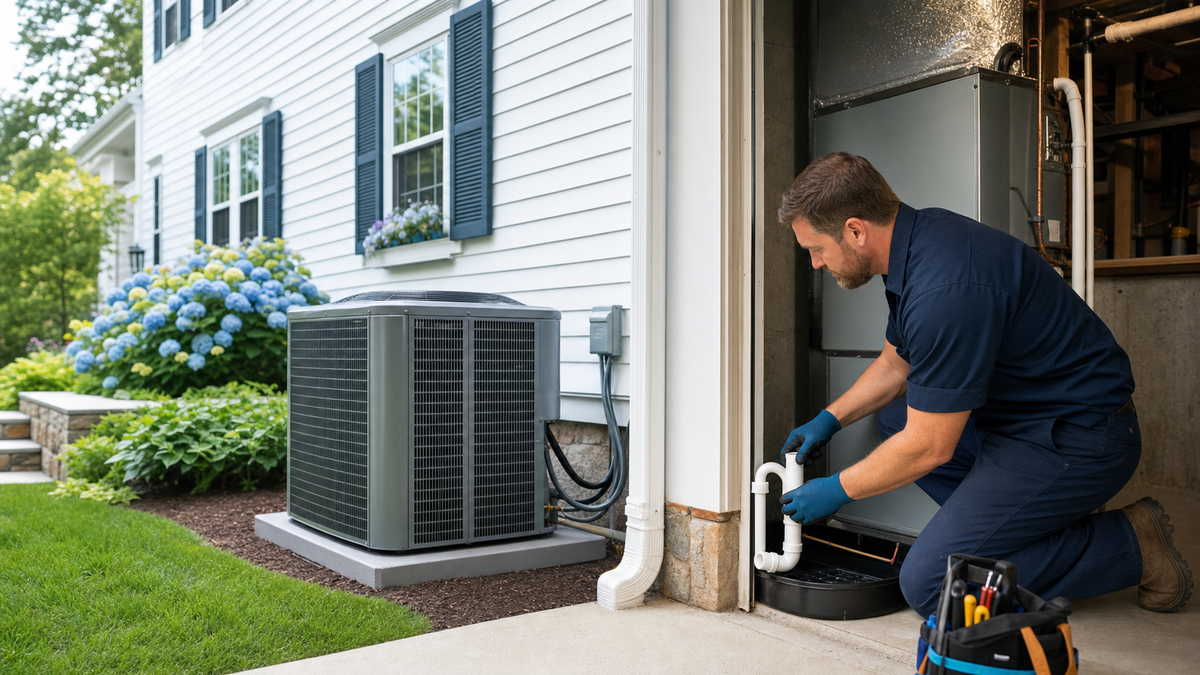
- Clear the condensate line with the right tools
- Check for cracked or damaged drain components
- Confirm the line has proper slope and flow
- Inspect the air filter, coil condition, and airflow
- Test system operation after the drain is cleared
- Recommend maintenance steps to reduce future clogs
The goal is not just to get water moving for the moment. The goal is to understand why the backup happened and help reduce the chance of another shutdown during the next heat wave.
Preventing AC drain line problems
Routine maintenance is the best way to catch drainage issues early. During a cooling-season visit, a technician can inspect the condensate pan, drain line, filter condition, coil cleanliness, and overall AC operation.
Homeowners can also help by changing filters on schedule, keeping return areas clean, and paying attention to musty smells or moisture around the equipment. If your system has shut off from a float switch before, mention it during service so the drain system gets extra attention.
For homeowners who want regular reminders, priority scheduling, and member pricing on repairs, NewGen HVAC offers a Comfort Plan with annual or monthly membership options. You can also review residential cooling services on the services page or confirm local coverage on the service areas page.
Call NewGen HVAC for AC drain line service
If your AC drain line is clogged, your system keeps shutting off, or you see water around the indoor unit, do not wait for the leak to spread. NewGen HVAC provides practical AC repair and maintenance for homeowners in Methuen, Lawrence, Haverhill, Andover, North Andover, Lowell, Tewksbury, Salem NH, Pelham NH, Derry NH, and nearby communities.
Call NewGen HVAC at (978) 876-8558, email jc@newgenhvac.com, or request service through newgenhvac.com to schedule an inspection or ask about a free estimate.
FAQ
Can a clogged AC drain line stop my air conditioner from working?
Yes. Many systems have a float switch that shuts the AC off when water backs up. This helps prevent water damage, but the clog still needs to be cleared and the drain system checked.
Is water around my indoor AC unit always from the drain line?
Not always. It may be a clogged drain line, frozen coil, cracked drain pan, disconnected drain, or another airflow or refrigeration issue. A technician can confirm the cause before recommending a repair.
How often should an AC drain line be checked?
It should be checked during routine cooling-season maintenance, especially before heavy summer use. Homes with past drain clogs, high humidity, pets, dust, or older equipment may need closer attention.